Shirt fit guide: slim, classic or relaxed
The short answer
Slim shirts are cut close and tapered at the waist; classic shirts are fuller with little taper; relaxed shirts give room everywhere. The quickest guide is your drop, chest minus waist: a big drop suits slim, a small one classic, a negative one relaxed. Then measure in eight places.
- 01Neck
- 02Chest
- 03Waist
- 04Sleeve
- 05Shoulder
- 06Length
- 07Bicep
- 08Wrist
What is the difference between slim, classic and relaxed fit shirts?
They share a collar and shoulder but part company below the arm. A slim fit is close through the chest and tapers at the waist. A classic fit is roomier with little taper. A relaxed or full fit adds room through the body, especially at the middle. Names vary by maker, and so do their measurements.
Some makers go further, with extra-slim below slim, or a “tailored” cut between slim and classic. Because each brand grades its cuts differently, a slim in one brand can be a classic in another: always compare the maker’s own chart with your measurements.
Find your fit: the drop finder
Drag the tapes, or use the arrow keys, to your body chest and waist. The finder works out your drop and the cut it points to.
Find your fitbody measurements
slim
Start with a slim cut
Your waist is much narrower than your chest, so a straight-cut shirt will billow at the middle. Slim and extra-slim cuts are tapered for exactly this.
Our rule of thumb, not a standard. Every maker grades its cuts differently, so check the brand’s own size chart against these numbers.
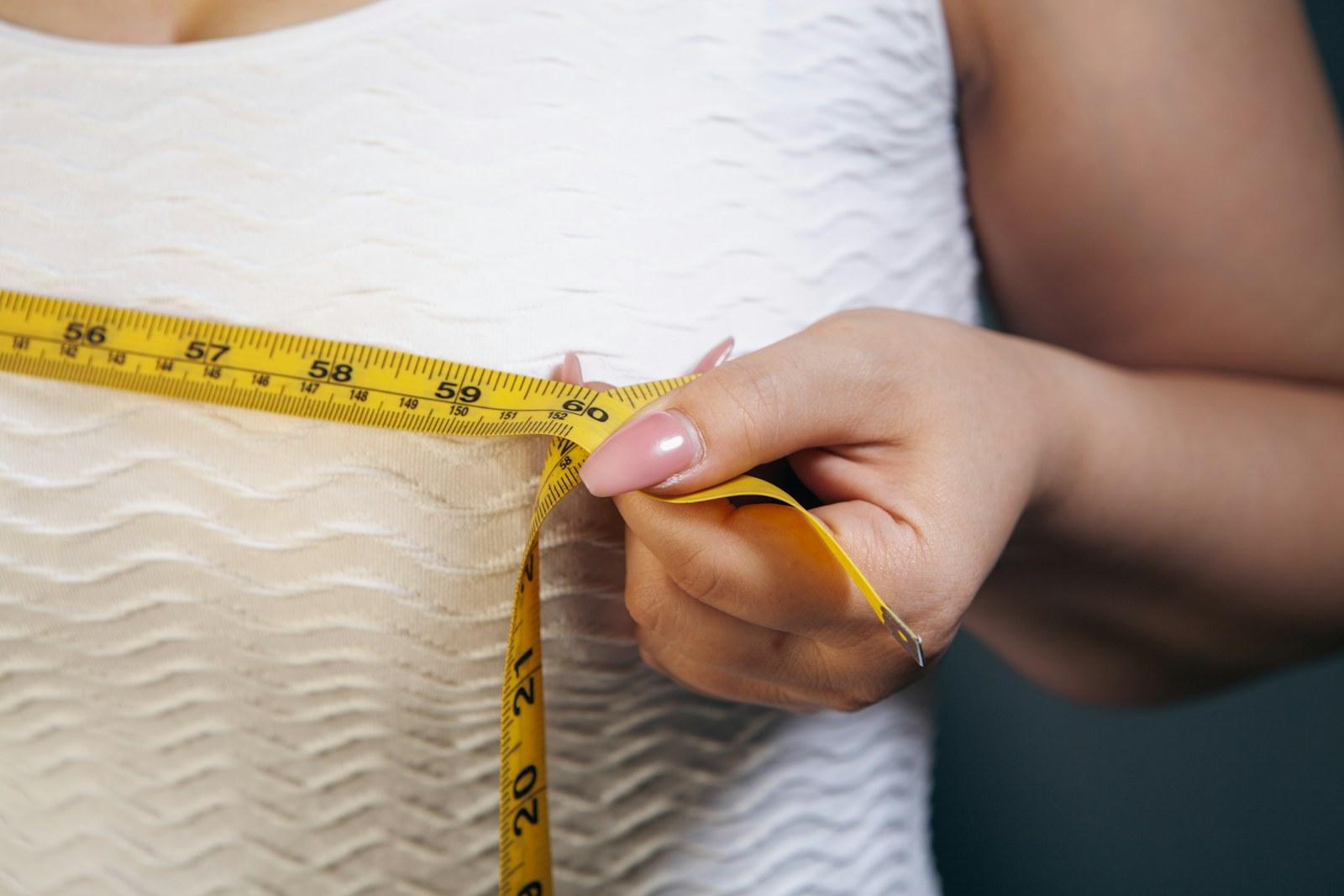
How to measure yourself for a shirt
You need a soft tape and, ideally, a second pair of hands. Stand naturally; don’t breathe in. These follow Proper Cloth’s method Proper Cloth.
- 01
Neck
Wrap the tape where the collar sits, just below the Adam's apple, standing relaxed, with one finger behind the tape.
- 02
Chest
Round the fullest part of the chest, under the arms and over the shoulder blades, arms relaxed. Don't puff out the chest.
- 03
Waist
Round the fullest part of the belly, usually at the navel. Snug, not squeezing. This is not your trouser waist.
- 04
Sleeve
From the centre back of the neck, over the shoulder and down to the base of the thumb. Easiest with a partner.
- 05
Shoulder
Across the back from the outer edge of one shoulder to the other, where the yoke should end.
- 06
Length
From the base of the back of the neck to where the shirt should end, usually the bottom of the seat.
- 07
Bicep
Round the fullest point of the relaxed upper arm, near the armpit, without flexing.
- 08
Wrist
Round the wrist bone, tape flat against the skin. The cuff needs room on top of this.
How should a cotton shirt fit?
Collar closed with about a finger of room; shoulder seam on the edge of the shoulder; no pulling across the chest or at the buttons; no billowing at the waist; sleeves ending at the base of the thumb with a cuff that stays put; and tails long enough to stay tucked when you lift your arms.
- Collar: buttoned, it should not pinch or leave a gap at the sides of the neck.
- Shoulders: a seam that drops down the arm means the shirt is too big.
- Buttons: horizontal creases pulling from the buttons mean it is too tight.
- Sleeves: a small extra button on the sleeve placket stops it gaping; Proper Cloth counts it as a mark of a good shirt Proper Cloth.
How do you read a dress shirt size like 15½ 33?
On U.S. dress shirts the first number is the collar, in inches, and the second the sleeve, from centre back of the neck to the wrist. So 15½ 33 is a 15½ inch collar with a 33 inch sleeve. Some brands sell paired sleeves like 32/33; casual shirts usually use S, M, L, XL.
Your collar size is your neck measurement, normally rounded to the nearest half inch. If you fall between sleeve lengths, the longer is usually the safer choice: a cuff that reaches the thumb looks right, one that stops short does not.
Does a cotton shirt shrink out of its size?
A well-finished cotton shirt should not, if you wash it as labelled. Mills pre-shrink shirting, and makers allow for what remains. Cotton Incorporated’s research shows most of the remaining relaxation happens in the last stage of tumble drying, so hot, long drying is what shrinks shirts.
The research is Cotton Incorporated’s shrinkage bulletin Cotton Incorporated; Proper Cloth tells customers not to adjust their neck measurement for shrinkage Proper Cloth. How to wash and dry to keep the fit is in cotton shirt care; what the collar should look like is in collars and cuffs.
Frequently asked questions
A slim fit is cut closer through the chest and tapers in at the waist, so it follows a trim body without billowing. A classic fit is fuller through the chest and waist with little taper, giving more room to move. Relaxed or full cuts add room again, especially at the middle.
The collar should close with about a finger's room, the shoulder seam should sit at the edge of your shoulder, the cuff should reach the base of your thumb with arms at your sides, the body should not pull at the buttons or billow at the waist, and the tails should stay tucked when you raise your arms.
On U.S. dress shirts, the first number is the neck in inches and the second is the sleeve length in inches, measured from the centre back of the neck to the wrist. A 15½ 33 shirt has a 15½ inch collar and a 33 inch sleeve. Casual shirts usually use S, M, L instead.
Not as a rule. Most cotton shirting is pre-shrunk at the mill, and makers build any remaining shrinkage into their sizing. Proper Cloth, for instance, asks customers not to adjust their neck measurement for shrinkage. Wash cool and avoid hot tumble drying, and a shirt should keep its size.
Sources
- 01How to Measure Your Body for Dress ShirtsProper Cloth reference, checked Nov 26, 2026
- 02High Quality Dress ShirtsProper Cloth reference, checked Nov 26, 2026
- 03A Guide to Improved Shrinkage Performance of Cotton Fabrics (ISP 1009)Cotton Incorporated, technical bulletin, 2004
Checked November 26, 2026. Brands change their cloth, cuts and labels, so check the maker’s own page before you buy. We are independent and not paid by any company named. Read the disclaimer or how we check facts.
Related guides
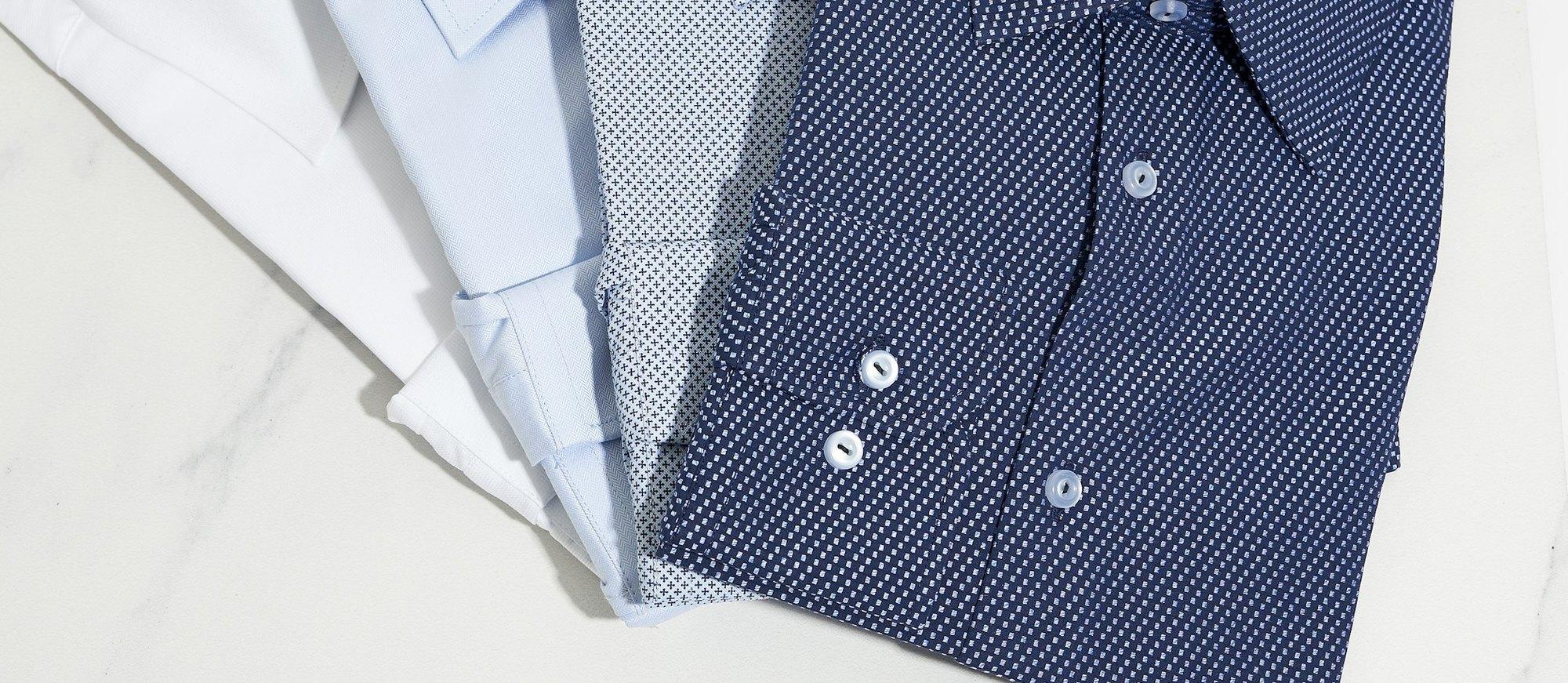 The cutCollars and cuffsSix collars and four cuffs, drawn as the pieces a shirtmaker cuts.Read the guide
 The cutSpotting a quality shirtTen checks a shirtmaker would make, from stitch count to button.Read the guide
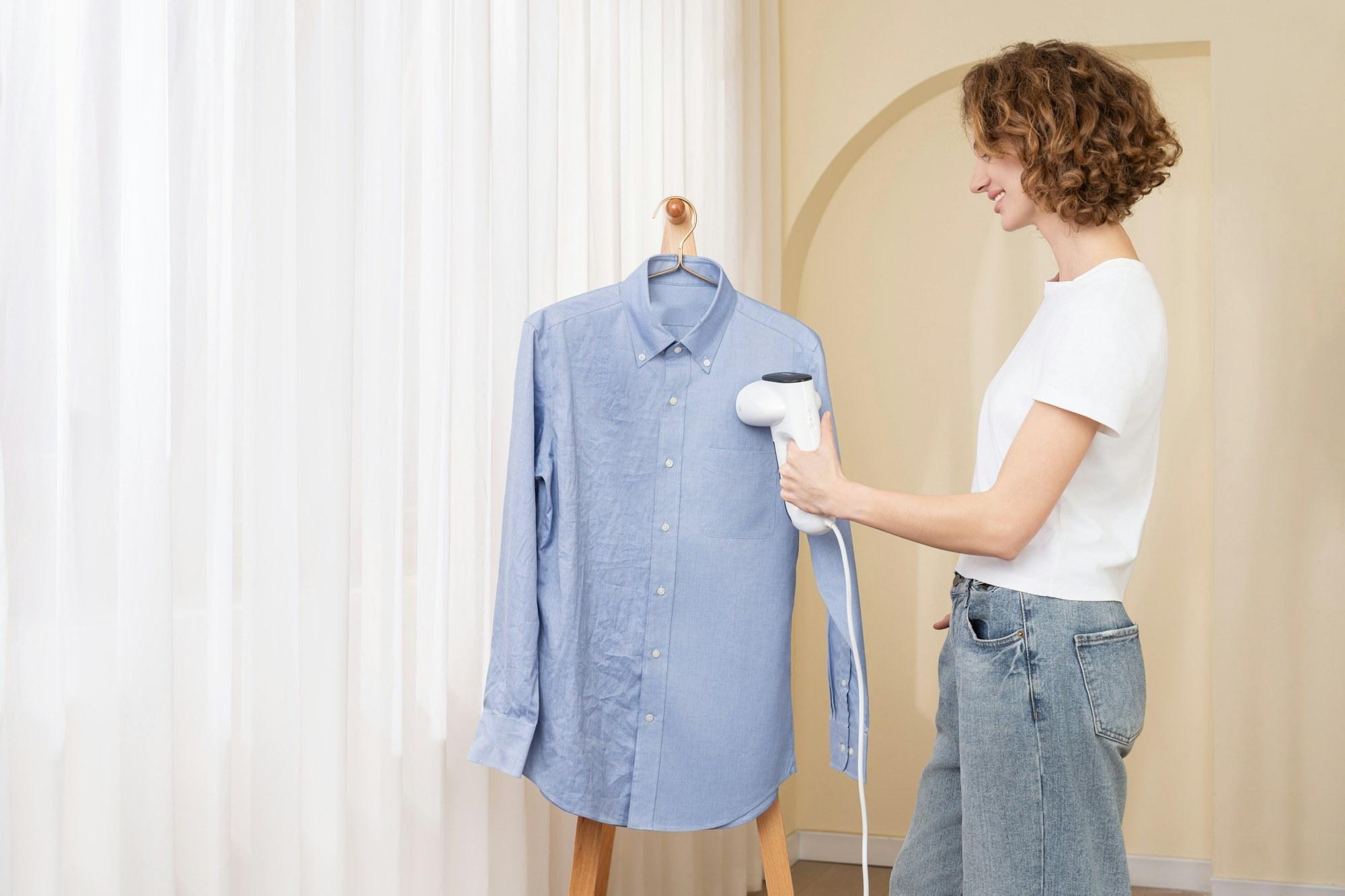 Care & sourcingCotton shirt careWash cool, dry gently, press damp, and read the label like a regulator.Read the guide