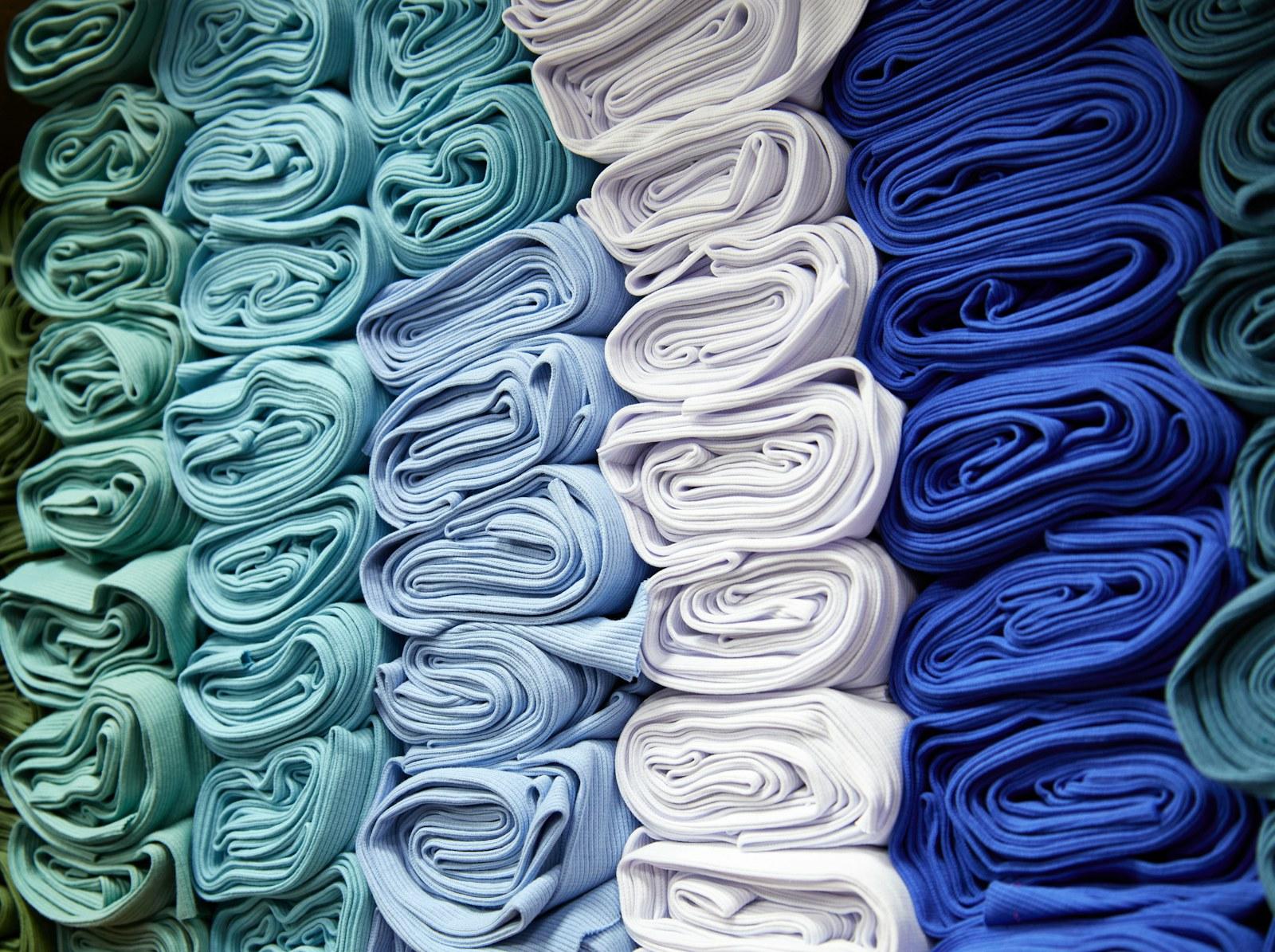
Shirt fabric types, swatch by swatch
The short answer
Most cotton shirts are made from one of a dozen weaves. Poplin (broadcloth) is the smooth, formal plain weave; oxford and pinpoint are basketweaves; twill and herringbone carry a diagonal; end-on-end, chambray, seersucker, dobby and flannel add colour, texture or warmth.
What is the difference between a shirt fabric and a weave?
A weave is the pattern in which lengthwise warp threads and crosswise weft threads cross. A fabric is the finished cloth: weave plus fibre, yarn fineness, ply, colour and finish. That is why poplin and chambray share a plain weave yet look and feel nothing alike.
Every shirting starts on a loom. The warp is stretched lengthwise; the weft is carried across it, pick by pick. Where the weft passes over or under the warp decides the weave, and the weave decides most of what you notice: smoothness, sheen, texture, weight, how the cloth breathes and how it creases. The other variables are the yarns themselves, how fine they are and whether they are two-ply, which we cover in two-ply and yarn count.
What are the plain-weave shirt fabrics?
Poplin (broadcloth), end-on-end and chambray are all plain weaves: each weft passes over one warp thread and under the next. Poplin uses fine, tightly packed yarns for a smooth, formal cloth; end-on-end alternates coloured and white warp; chambray pairs a dyed warp with a white weft.
Poplin, or broadcloth
Thin, smooth and flat, with little sheen and a crisp hand. It is the professional standard under a suit, and it creases easily Proper Cloth. Poplin is cool to wear, which makes it a year-round cloth and the best formal choice in heat. Charles Tyrwhitt describes its poplin as closely woven in a simple criss-cross, strong yet lightweight Charles Tyrwhitt.
End-on-end
A coloured warp end alternates with a white one, crossed by a white weft. Across a room it reads as a solid colour; up close it shows a fine, slightly speckled texture. It is light, and suits warm climates Proper Cloth.
Chambray
Dyed warp, white weft, usually in heavier yarns, so the colour looks slightly uneven, like a lighter, softer cousin of denim. Proper Cloth calls it more appropriate for casual wear than dress Proper Cloth, and Charles Tyrwhitt calls it the light and supple cousin of denim, made for off-duty shirts Charles Tyrwhitt.
What are oxford, pinpoint and royal oxford?
They are the basketweave family, where threads work in pairs. Oxford cloth is the heaviest and most textured, usually a coloured warp with a white weft; pinpoint uses finer yarns in a tighter set; royal oxford has a larger, more pronounced weave with a distinct shine and is the dressiest of the three.
Oxford is hard-wearing and slightly rough, and softens with every wash. It is the least dressy of the common shirtings and, in some offices, not considered formal at all Proper Cloth. Pinpoint is the everyday work shirt: durable, opaque and a little heavier than broadcloth, sitting between oxford and poplin in formality. Royal oxford turns the same idea into a dress cloth. For the full head-to-head, see oxford vs poplin.
What is twill, and how is herringbone different?
In a twill, each weft floats over two or more warp threads and the crossing steps along one thread per row, drawing a diagonal rib. Twill drapes softly, has a gentle sheen and creases less than poplin. Herringbone is a twill whose diagonal reverses at set intervals, forming a chevron.
Twill is softer and drapes more easily than broadcloth, with more resistance to wrinkles, though it will not give quite the same crisp look Proper Cloth. Herringbone mirrors the twill into a V and works dressed up or down. Denim is a twill too, usually indigo warp on white weft, and shirting denim is far lighter than jeanswear.
Which shirt fabrics add texture or warmth?
Dobby weaves add small woven figures, often tone on tone. Seersucker puckers into crinkled stripes because some warp is woven at a different tension, which keeps it off the skin in heat. Flannel is brushed to raise a soft, warm nap and is often woven in checks.
A dobby can weigh anything from broadcloth to twill, so it covers both office and smart-casual. Seersucker needs no iron and is made for high summer. Flannel is decidedly casual Proper Cloth, and the warmest shirting you will find in pure cotton.
The swatch book: watch each cloth woven
Every swatch below is drawn thread by thread from its weave draft. Pick one and it is woven again in front of you, with how it feels and when to wear it.
Plain 1/1All year, best in heat
Poplin also called broadcloth
- How it is woven
- Plain weave: each weft pick passes over one warp end and under the next, packed tight with fine yarns.
- How it feels
- Smooth, flat, thin and crisp, with little sheen. Cool to wear, and it creases easily.
- Wear it for
- The business shirt under a suit and tie; the classic white shirt.
All twelve shirt fabrics compared
| Fabric | Weave | Feel | Dress | Season |
|---|---|---|---|---|
| Poplin | Plain 1/1 | Smooth, flat, thin and crisp, with little sheen | 5 / 5 | All year, best in heat |
| Twill | Twill 2/1 | Soft, with a gentle sheen and more drape than poplin | 4 / 5 | Autumn to spring |
| Pinpoint | Basket 2×1, fine | Smooth with a fine dot of texture, opaque, a little heavier than broadcloth, and durable | 4 / 5 | All year |
| Oxford | Basket 2×1 | Soft, slightly rough, visibly textured and heathered | 2 / 5 | All year, cooler months best |
| Royal oxford | Basket 2×2 | Clear texture with a distinctive shine | 4 / 5 | All year |
| Herringbone | Broken twill | Textured and soft, with a zig-zag you see up close | 3 / 5 | Autumn and winter |
| End-on-end | Plain, alt. warp | Lightweight | 4 / 5 | Spring and summer |
| Chambray | Plain, dyed warp | Soft, light and slightly uneven in colour, like a lighter cousin of denim | 2 / 5 | All year |
| Seersucker | Plain, slack stripes | Crinkled, airy and light; the puckers hold the cloth off the skin | 1 / 5 | High summer |
| Flannel | Twill 2/2, brushed | Warm, fuzzy and heavy | 1 / 5 | Winter |
| Dobby | Plain + figure | Weight anywhere from broadcloth to twill, with a subtle raised pattern | 4 / 5 | All year |
| Denim | Twill 3/1 | Sturdy; shirting denim is lighter and softer than jeanswear | 1 / 5 | All year |
How do you choose the right shirt fabric?
Start with the occasion, then the season. For suits and ties choose poplin, twill or pinpoint; for smart-casual, oxford, royal oxford, herringbone or a dobby; for weekends, chambray, flannel or denim. Lighter, plain weaves suit heat; heavier twills and brushed cloths suit cold.
- One shirt for everything: a white or pale blue poplin or pinpoint.
- Hates ironing: oxford, twill or seersucker show creases least.
- Runs hot: poplin, end-on-end, seersucker.
- Wants texture without going casual: royal oxford, herringbone, a tone-on-tone dobby.
The weave is only half the story: fibre and yarn decide how the cloth ages. See types of cotton and two-ply and yarn count.
Frequently asked questions
For a dress shirt, a fine cotton poplin, twill or pinpoint: smooth, breathable and crisp after pressing. For a casual shirt, oxford, chambray or flannel, which are softer and more forgiving. In heat, end-on-end or seersucker; in cold, twill, herringbone or flannel. Cotton suits all of them.
Poplin, also called broadcloth, is the most common cloth for dress shirts: a tight plain weave that is smooth, light and formal. Oxford cloth is the most common for button-down casual shirts. Both are almost always cotton or a cotton blend.
The weave is the pattern in which warp and weft threads cross: plain, basket, twill or a figured weave. The fabric is the finished cloth, which also depends on the fibre, yarn count, ply, colour and finish. Poplin and chambray share one weave but are different fabrics.
T-shirts are knitted, not woven, and cotton single jersey is the classic: soft, stretchy and breathable. Long-staple cottons such as Supima make a smoother, longer-lasting jersey. Polo shirts usually use piqué, a textured knit. Our T-shirt guide explains both.
Among pure cottons, textured and heavier cloths hide creases best: oxford, twill and herringbone wrinkle less visibly than a fine poplin, and seersucker is meant to look crinkled. Non-iron shirts reduce creasing with a chemical finish rather than the weave.
Sources
- 01Dress Shirt Fabrics OverviewProper Cloth reference, checked Nov 26, 2026
- 02About our shirt weavesCharles Tyrwhitt, checked Nov 26, 2026
- 03Thread Count and PlyProper Cloth reference, checked Nov 26, 2026
Checked November 26, 2026. Brands change their cloth, cuts and labels, so check the maker’s own page before you buy. We are independent and not paid by any company named. Read the disclaimer or how we check facts.
Related guides
- The clothOxford vs poplinBasketweave against plain weave, under the loupe and on the body.Read the guide
- The clothTwo-ply and yarn countRead 100/2 × 100/2 like a mill does, and ignore inflated counts.Read the guide
- The cutDress vs casual shirtsCollar, cloth, sleeve, hem: the spec sheet of each.Read the guide