Types of cotton for shirts, and what each label promises
The short answer
Shirt labels name five cottons worth knowing. Egyptian, Supima (American Pima) and Sea Island are long or extra-long staple cottons, prized for fine, smooth yarn. Organic (GOTS) and BCI Cotton describe how cotton is grown and traced, not how long its fibres are. Each name is policed by its own body.
Staple lengthinches, to scale
The ICAC definition of extra-long staple. Upland cotton, most of the world’s crop, is shorter.
What types of cotton are used for shirts?
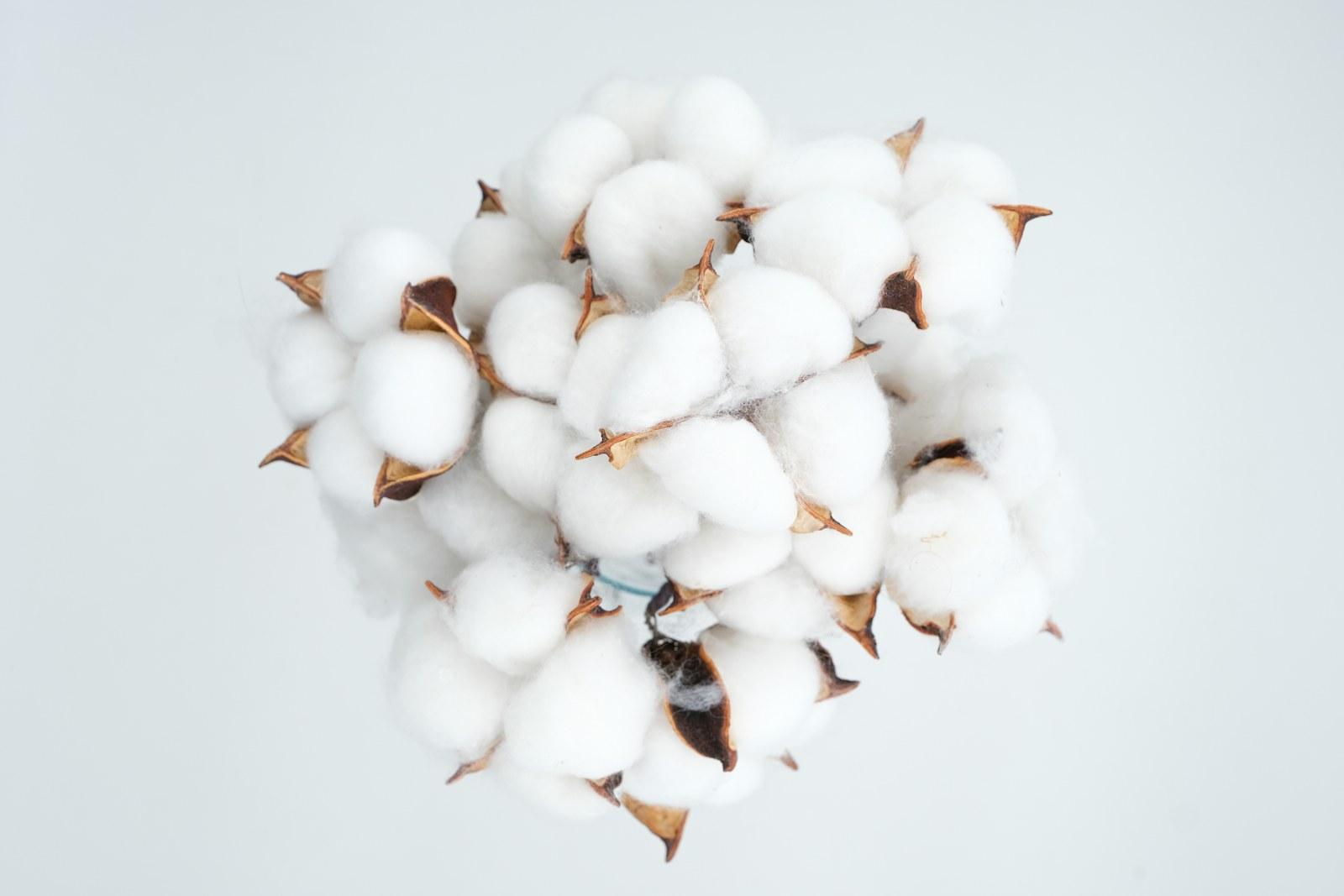
Most shirts use upland cotton, the world’s everyday crop. Finer shirts use long or extra-long staple cottons: Egyptian, American Pima sold as Supima, and the very rare West Indian Sea Island. Organic and BCI Cotton are sourcing standards that can apply to any of these, with their own labels and rules.
Botanically, Pima, Sea Island and most Egyptian cottons belong to the species Gossypium barbadense, the long-fibre cotton; upland is Gossypium hirsutum. What a label promises depends on who stands behind the name, so for each one below we name the body and what it checks.
Why does staple length matter in a shirt?
Staple is the length of a single fibre. Longer fibres twist into finer, stronger and smoother yarn with fewer loose ends, which means a softer, silkier cloth that pills less. Extra-long staple (ELS) cotton must be at least 1⅜ inches long.
That threshold is the International Cotton Advisory Committee’s definition Wikipedia. Finer yarns are what make high counts like 100s, 120s and 140s possible, and what allow a two-ply poplin to be both light and strong. Read more in two-ply and yarn count.
What is Egyptian cotton, and who certifies it?
Egyptian cotton is long and extra-long staple cotton grown in Egypt. The Egyptian Cotton™ logo is licensed by the Egyptian Cotton Association, a non-profit set up in 2005, which keeps a public registry of licensees, traces production orders back to bale IDs and DNA-tests samples.
The Association lists its owners as Egypt’s Ministry of Investment and Foreign Trade and the Alexandria Cotton Exporters’ Association Egyptian Cotton Association. Because the name sells, it has been abused: see our full Egyptian cotton shirts guide for how to check a label.
What is the difference between Pima and Supima cotton?
Pima is a family of extra-long staple cotton grown mainly in the American Southwest and elsewhere. Supima is a trademark for 100% American-grown Pima, promoted since 1954 by the Supima growers’ organisation and licensed to brands. All Supima is Pima; not all Pima is Supima.
Supima says it accounts for less than 1% of the world’s cotton, grown mostly in California’s San Joaquin Valley with smaller crops in Arizona, New Mexico and Texas, and warns that at retail “Pima” can be a generic word for better cotton that does not guarantee an extra-long staple Supima. You will see Supima on T-shirts as often as shirts: Uniqlo, for one, sells a 100% Supima cotton crew-neck tee Uniqlo.
What is Sea Island cotton?
West Indian Sea Island is a very rare extra-long staple cotton grown in the Caribbean, mainly Jamaica and Barbados. The West Indian Sea Island Cotton Association (WISICA) inspects the crop and certifies its authenticity. Shirtmakers cite a harvest of roughly 130 to 150 bales a year, out of about 110 million.
Turnbull & Asser puts it at 130 of 110 million bales, with its cloth woven by the Albini mill Turnbull & Asser; Budd puts it at about 150 bales and notes a cheaper, non-WISICA alternative sold as “Sea Island Quality”, with a slightly shorter staple Budd. Sunspel says Thomas A. Hill imported Caribbean Sea Island cotton for the company around 1900 Sunspel. Treat any Sea Island shirt without a WISICA mark as the “quality” version, not the real thing.
What does GOTS organic cotton guarantee?
A GOTS label means the product was certified to the Global Organic Textile Standard by an accredited body, from processing to finished product. The “organic” grade needs at least 95% certified organic fibre; “made with organic materials” needs 70 to 94%, plus GOTS rules on chemicals, wastewater and labour.
GOTS covers processing, not farming itself, and uses annual on-site audits and physical segregation rather than mass balance GOTS GOTS labelling. It says nothing about staple length, so an organic shirt is not automatically a finer one. More in sustainable cotton shirts.
What is BCI Cotton (formerly Better Cotton)?
BCI Cotton comes from farms licensed under the Better Cotton Initiative, a standard founded in 2005 that trains farmers to grow cotton with less harm to people and environment. In October 2025 the organisation returned to its full name and launched a product label requiring at least 30% BCI Cotton.
BCI previously relied on a mass-balance model; the new label sits on a system that tracks physical cotton from farm to product FashionUnited BCI. Like organic, it is about how cotton is grown, not how long it is.
The five cotton names compared
| Name | What it is | Who stands behind it | Says staple? |
|---|---|---|---|
| Egyptian | Long / extra-long staple grown in Egypt | Egyptian Cotton Association (licence, registry, DNA tests) | Yes |
| Supima | 100% American-grown Pima | Supima (trademark licensing) | Yes, ELS |
| Sea Island | Caribbean extra-long staple | WISICA (inspection, certificate) | Yes, ELS |
| GOTS organic | 95%+ certified organic fibre | GOTS via accredited certifiers | No |
| BCI Cotton | Cotton from licensed BCI farms | Better Cotton Initiative | No |
Frequently asked questions
The long and extra-long staple cottons, Egyptian, Supima and West Indian Sea Island, spin the finest, smoothest yarns and make the silkiest shirts. But a well-woven two-ply shirt in good long-staple cotton will outlast a poorly made one in a famous name. Judge the cloth and the making together.
Not quite. Supima is a trademark for 100% American-grown Pima cotton, licensed by the Supima growers' body. All Supima is Pima, but not all Pima is Supima: Pima is also grown elsewhere, and Supima itself notes that at retail “Pima” is a generic term that does not guarantee an extra-long staple.
Organic describes how the cotton was farmed and processed, not how fine or long it is. A GOTS organic shirt meets rules on organic fibre content, chemicals, wastewater and labour. It can be as soft as conventional cotton of the same staple, but organic alone says nothing about quality of weave or making.
Staple is the length of an individual cotton fibre. Longer fibres can be spun into finer, stronger, smoother yarn with fewer loose ends. Extra-long staple (ELS) cotton, as the International Cotton Advisory Committee defines it, is at least 1⅜ inches long.
Sources
- 01Gossypium barbadense: classification by staple length (ICAC definition of extra-long staple)Wikipedia, checked Nov 27, 2026
- 02Supima: the American Pima trade association, founded 1954Wikipedia, checked Nov 27, 2026
- 03The Cotton: American Pima, grown in the U.S.Supima (official site), checked Nov 26, 2026
- 04Egyptian Cotton Association: licensing, registry and traceabilityEgyptian Cotton Association (official site), checked Nov 26, 2026
- 05West Indian Sea Island: The World's Rarest CottonTurnbull & Asser, Off the Cuff, checked Nov 26, 2026
- 06Seven Facts About Sea Island CottonBudd Shirtmakers, checked Nov 26, 2026
- 07Our historySunspel, checked Nov 26, 2026
- 08Labelling: the 'organic' and 'made with organic materials' gradesGlobal Standard gGmbH, checked Nov 26, 2026
- 09Global Organic Textile Standard (GOTS)Global Standard gGmbH, checked Nov 26, 2026
- 10Who we areBetter Cotton Initiative (BCI), checked Nov 26, 2026
- 11Better Cotton Initiative rebrands and introduces new traceability labelFashionUnited, Oct 13, 2025
- 12Supima Cotton Crew Neck T-ShirtUniqlo, checked Nov 26, 2026
Checked November 26, 2026. Brands change their cloth, cuts and labels, so check the maker’s own page before you buy. We are independent and not paid by any company named. Read the disclaimer or how we check facts.
Related guides
 The clothEgyptian cotton shirtsLong staple, a licensed logo and a public registry you can check.Read the guide
 Care & sourcingSustainable cottonThe water figure everyone quotes, traced to its source.Read the guide
- The clothTwo-ply and yarn countRead 100/2 × 100/2 like a mill does, and ignore inflated counts.Read the guide